PRODUCTS
  • Home
  • PRODUCTS
  • HUMAN TISSUE
  • HD IMPLANT
Our innovations go beyond
treatment and beauty to change lives.
HD IMPLANT

Feel New again

ADM Human Tissue

HD IMPLANT is an Acellular Dermal Matrix (ADM) harvested from
carefully selected donors, engineered as an optimal skin graft material
by removing all factors that may cause immune reactions.
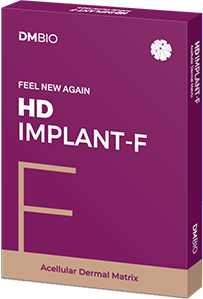

HD IMPLANT-F
HD IMPLANT Structure

Key Features & Advantages of HD IMPLANT – Safety

HD IMPLANT is a human-derived allogeneic dermal product that uses only verified donors who have passed
eligibility screening under the standards of the U.S. AATB (American Association of Tissue Banks).
It is the most optimized acellular dermal matrix (ADM) developed with a unique patented cryopreservation
technology (Patent No. 10-1107022).
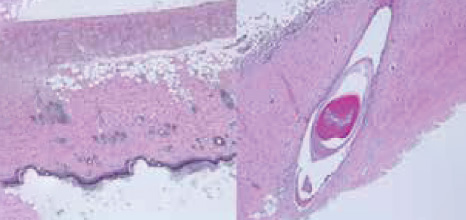
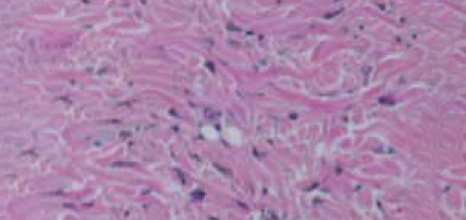
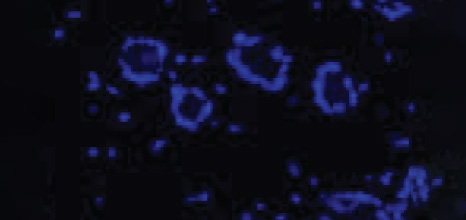
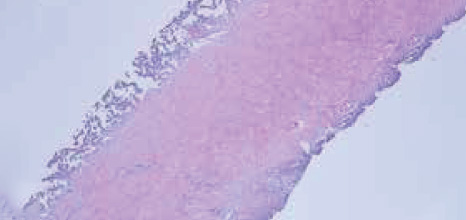
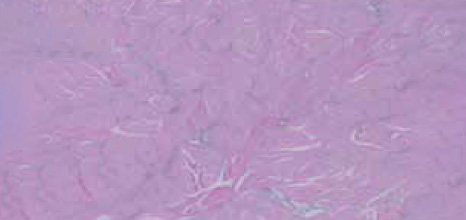
Decellularization Verification 1 – Tissue Staining* Results from the company’s affiliated research institute
H&E Staining : Dark blue indicates cells, light red represents extracellular matrix. DAPI Staining : Blue dye marking cells.
H&E Stain
H&E Stain
DAPI
Native
H&E Stain
H&E Stain
DAPI
HD IMPLANT™

When dark blue dots are observed, it indicates stained cells, suggesting the presence of residual cells.
In contrast, the light red and pale blue areas represent the extracellular matrix.

In native (unprocessed) skin tissue, numerous cells and hair follicles can be seen.

In the processed HD IMPLANT™, no stained cells are observed, confirming the absence of residual cells.
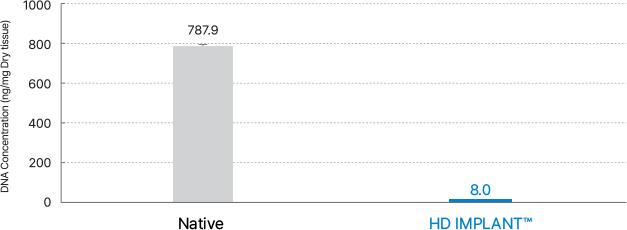
Decellularization Verification 2 – Measurement of Residual DNA

After the decellularization process that removes donor cells, verification is carried out to ensure that any remaining cell debris is completely eliminated.

We also measure the residual DNA inside cells after cell destruction and processing to confirm how much remains.

Tests show that HD IMPLANT™ releases almost no residual DNA, meeting the excellent standards of the European Association of Tissue Banks (EATB).

Key Features & Advantages of HD IMPLANT
– Excellent Engraftment
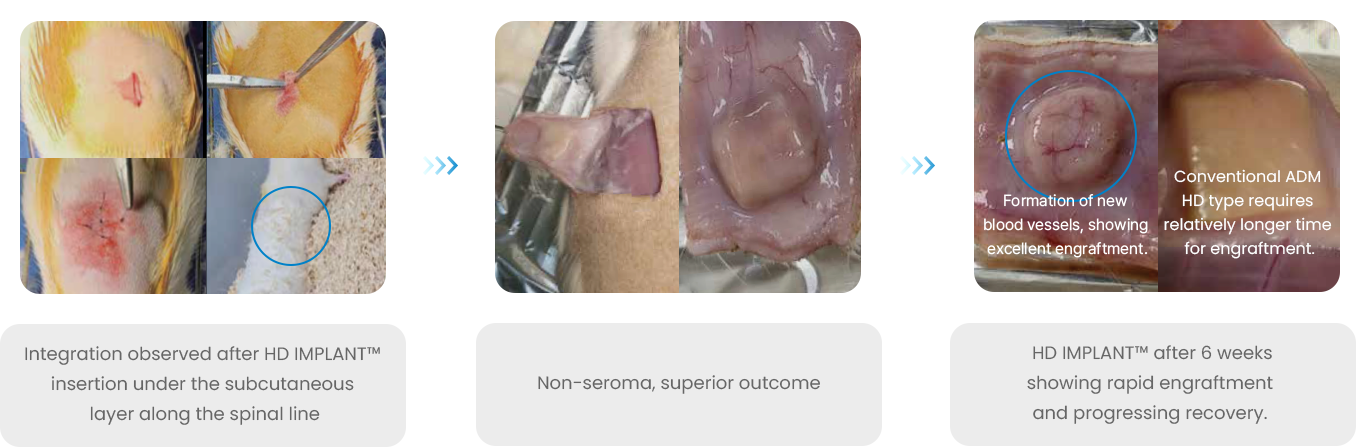
Comparison of Engraftment Images
Confirmed that HD IMPLANT™ achieves rapid engraftment between the fascia and muscle layer in rats, forming new blood vessels.

Key Features & Advantages of HD IMPLANT
– Meaningful Collagen Formation
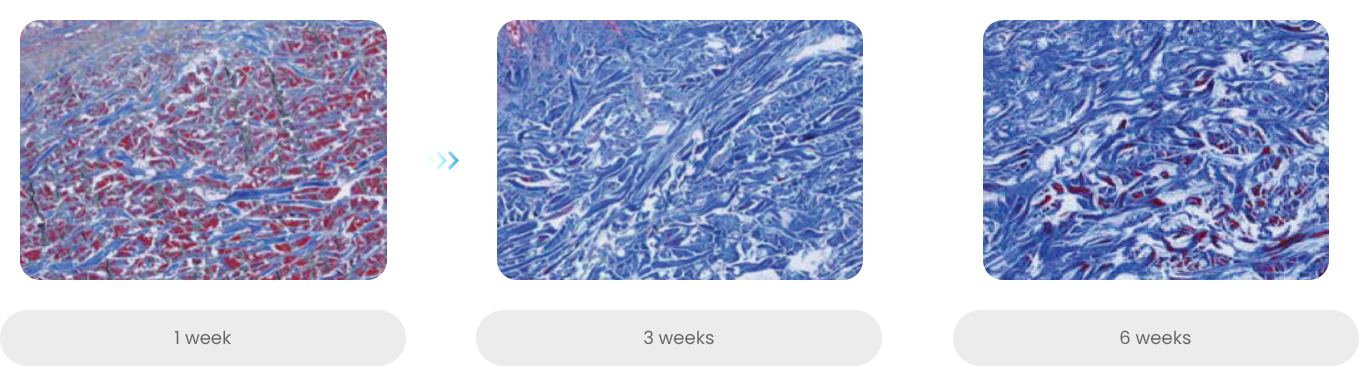
Measurement of Collagen Increase (Masson’s Trichrome Staining)
* Masson’s trichrome staining: A method used to evaluate the extent of collagen fiber formation, a key component of the ECM. (Blue: collagen fibers)
From 1 to 3 to 6 weeks after engraftment, collagen fiber formation increased significantly over time.

Key Features & Advantages of HD IMPLANT

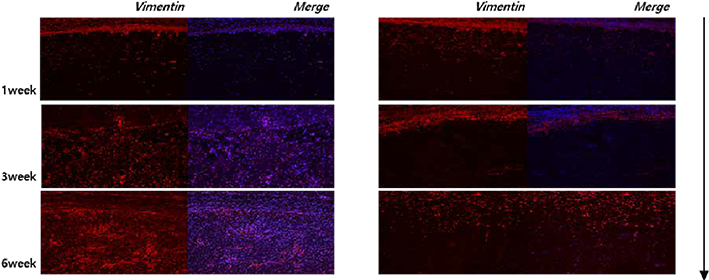
Verification of Fibroblast Migration
Fibroblast

Cells that produce collagen and other ECM components, supporting tissue formation and playing a key role in structural integrity and wound healing.

  • DAPI I : Cells
  • CK-10 : Epithelium
  • Vimentin : Fibroblasts
After transplantation into rat tissue, fibroblasts were observed migrating into the collagen structure.

ZILPLANT Procedure

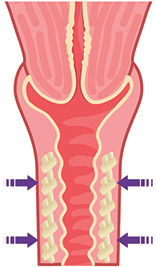
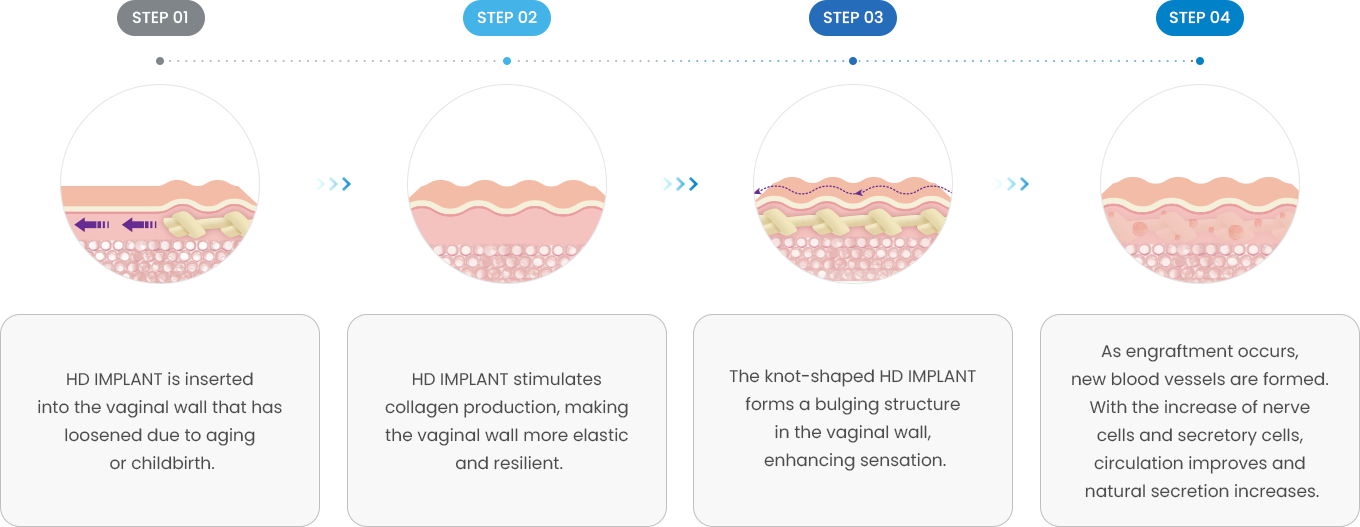
This procedure involves inserting HD IMPLANT-F, a human-derived allogeneic dermal graft processed into a knot-like form, into the vaginal tissue.

Currently, allogeneic dermis is widely used in various fields such as breast reconstruction, skin grafts for burn patients, shoulder reconstruction, and male enhancement surgeries.

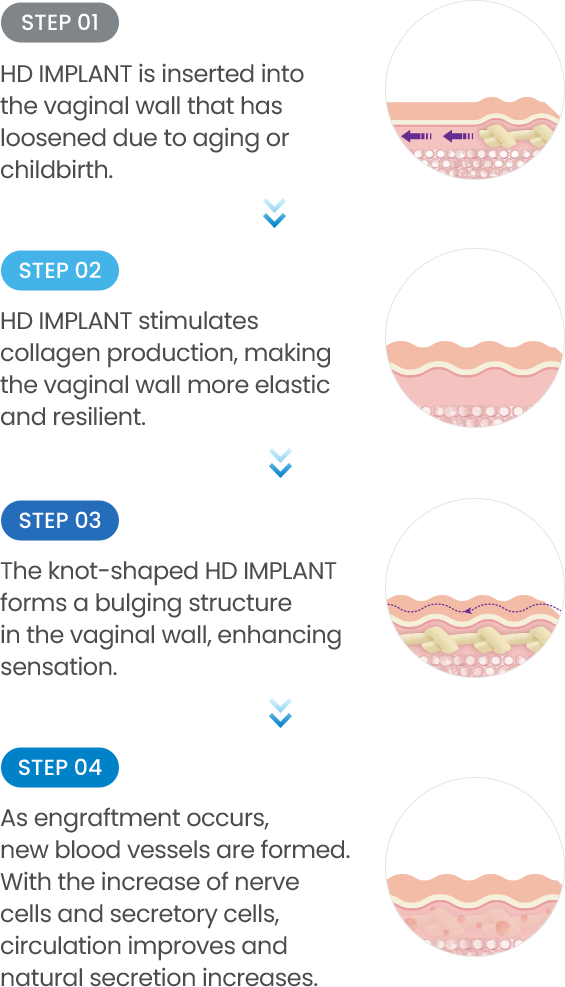
Mechanism of the ZILPLANT Procedure
Before&After of the ZILPLANT Procedure

Before
After

Q&A of the ZILPLANT Procedure

Q
Is it safe to use dermis, since it is human tissue?
A
Yes. It is a safe product made from allogeneic dermis that has passed strict testing, with all cells that could trigger an immune response removed. Currently, it is widely used in breast reconstruction, skin grafts for burn patients, shoulder reconstruction, and male enhancement surgeries.
Q
What is the difference between dermal fillers and ZILPLANT?
A
Dermal fillers contain less dermal tissue, so the volume does not last long. ZILPLANT, however, uses 100% dermal tissue, allowing volume to be maintained for a long time. It is also far more effective in restoring vaginal folds.
Q
How long does the effect last?
A
Typically 2–3 years, after which it is gradually replaced by the patient’s own tissue for long-term results. If the effect diminishes over time, an additional 1–2 lines of treatment can be performed.
Q
Does the procedure cause pain or a foreign body sensation?
A
Pain after the procedure is minimal, and because it uses allogeneic dermis, patients do not feel any foreign body sensation.
Q
What precautions should I take after the procedure?
A
For one week, avoid alcohol, smoking, saunas, spas, and strenuous exercise. Mild bleeding similar to menstruation may occur, so it is recommended to use sanitary pads for about 3–5 days. Sexual activity is generally possible after 2–3 weeks.

ZILPLANT Procedure Video