

What is SCecm L?
Acellular Dermal Matrix
SCecm L is a pre-filled injectable made of 100% acellular dermal matrix (ADM), offering excellent biocompatibility.
It contains collagen, hyaluronic acid, elastin, and various growth factors, making it suitable for treating damaged soft tissues as well as for use in surgical procedures.
-
01Excellent
Biocompatibility
& Soft Tissue
RegenerationMade from 100% Acellular Dermal Matrix (ADM), SCECM-L offers excellent biocompatibility. Using essential collagen from the human body, it minimizes side effects and complications, and engrafts into damaged tissue to support regeneration.
-
02High-Quality
Optimized Human ADM with SC (Supercritical) TechnologyAchieves a 95% decellularization rate and over 70% ECM preservation. Contains hyaluronic acid, elastin, and various growth factors not found in xenogeneic collagen.
-
03Detergent-Free
ProductCompletely free from detergents that may cause toxicity when introduced into the body.
-
04Sterile Pre-filled
Syringe – No
Hydration RequiredDelivered in a sterile, hydrated pre-filled syringe, allowing safe and convenient injection without infection concerns.
-
05Minimized
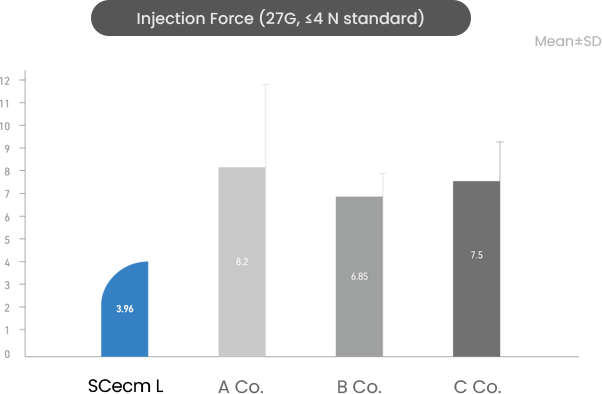
Injection PainProvides consistent low injection force (down to 27G), reducing patient discomfort during administration.
Components
SCECM-L contains a variety of essential components.

A protein that forms ligaments, tendons, cartilage, and skin, maintaining the structural integrity of tissues. It serves as a mediator for cell signaling and plays a regulatory role in tissue development and repair.

Supplies hydration and nutrients to joints and tissues. It contributes to biological compatibility, adhesion, and absorption, aiding in wound healing. As a naturally occurring polysaccharide in the body, it is essential for moisture retention and tissue support.

A fibrous protein that connects collagen fibers and provides elasticity to tissues and skin. It helps maintain flexibility and can restore function in tissues that require resilience, such as joints and tendons.

One of the key components of skin, helping to store growth factors and natural bioactive molecules that support immunity and healing.

A protein that links cells to collagen fibers. It supports cell proliferation, migration, and attachment, thereby contributing to wound healing.

Biological molecules such as those produced by osteoblasts, fibroblasts, and chondrocytes. They promote cell proliferation and differentiation, accelerating tissue regeneration and maintaining cellular function.
Characteristics
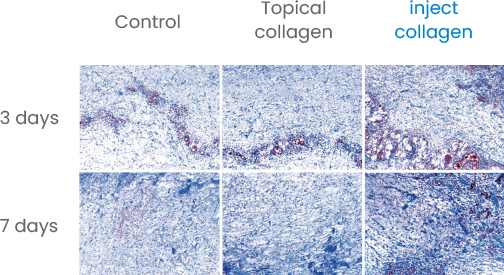
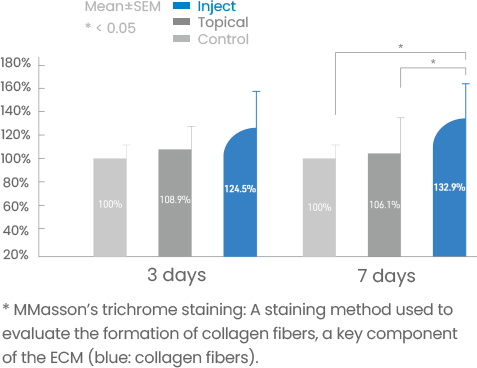
Collagen supplementation (topical & injectable) in damaged tissue led to a significant increase in collagen production after 7 days.
(43% increase vs. control, 19% increase vs. topical application)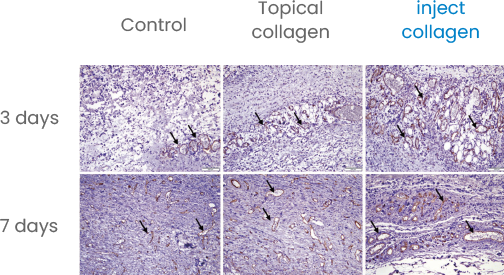
(Immunohistochemical staining-CD31*)
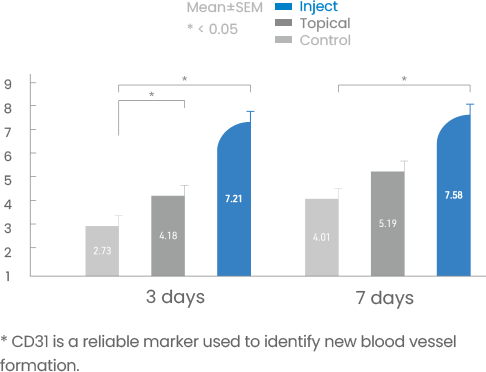
When collagen supplementation (topical and injection) was applied to damaged tissue,
new blood vessel formation significantly increased from day 3.
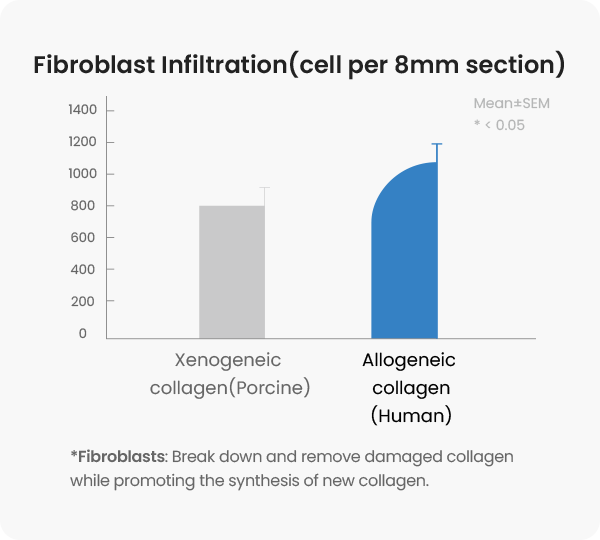
Compared with xenogeneic collagen, allogeneic collagen shows much higher fibroblast infiltration, making it more effective for soft tissue repair and regeneration.
(Fibroblast infiltration increased by about 356%)

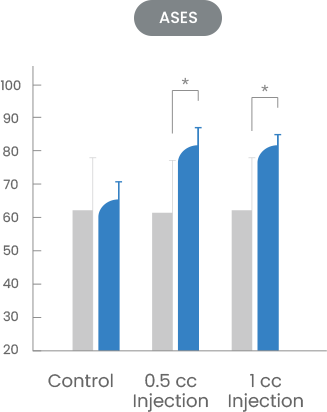
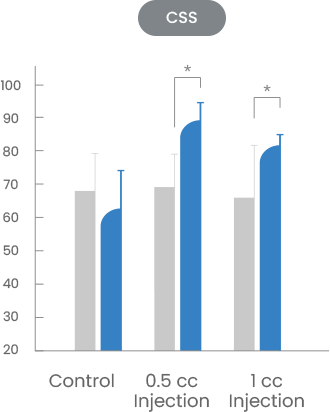
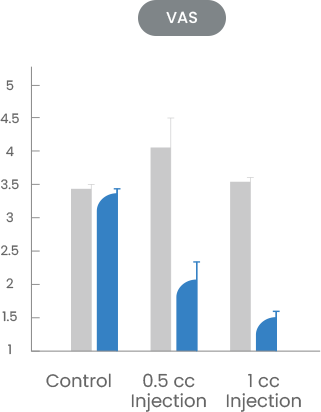
* ASES (American Shoulder and Elbow Surgeons Score): A subjective index for shoulder pain and function.
* CSS (Constant Shoulder Score): An evaluation method widely used in Europe, combining subjective assessment with physical examination.
* VAS (Visual Analogue Scale Score): A subjective index for measuring pain.
SCecm L allows easy adjustment of concentration depending on tissue and indication, and higher collagen concentration leads to enhanced therapeutic effects.
Injection Pain
Pain Reduction During Injection
SCecm L, with its uniform particle size (71.8±0.3 μm) and consistently low injection force, can be administered using needles as fine as 27G, helping to minimize injection pain.
Lower injection force allows precise delivery to the desired area without excessive pressure, reducing the risk of sudden bursts and tissue damage, and ensuring greater procedural safety.
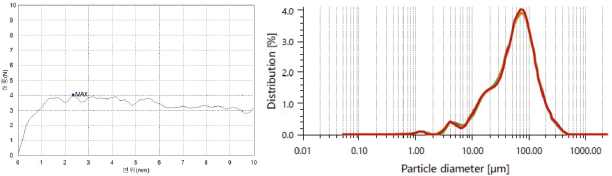
* Achieves uniform particle dispersion through patented dispersion formulation technology (Patent Application No. 10-24-00541519).
Recommended Use
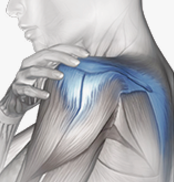
Recommended 3–5 injections under ultrasound
guidance for torn areas (1–2 week intervals).
- Shoulder impingement syndrome
- Osteoarthritis
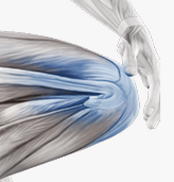
ACL, PCL tears, MCL reconstruction, or post-arthroscopy:
recommended 3–5 injections (1–2 week intervals).
- Meniscal tear

Recommended 3–5 injections for lumbar stabilization
and rehabilitation after spinal surgery (1–2 week intervals).
- Lumbar disc herniation
- Post-spinal surgery pain
- Lumbar spondylosis
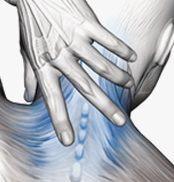
Recommended 3–5 injections for pain relief and
rehabilitation after surgery (1–2 week intervals).
- Cervical radiculopathy
- Cervical spondylosis

Recommended 3–5 injections under ultrasound
guidance for elbow pain (1–2 week intervals).
- Golf elbow
- Extensor tendon rupture
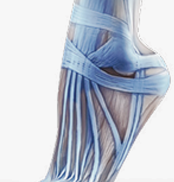
Recommended 3–5 injections under ultrasound guidance for inflamed Achilles tendon (1–2 week intervals).
- Achilles tendinitis
- Diabetes-related
- Foot/ankle trauma and inflammation